You have found a used vehicle listed at $15,000 and you are wondering how much it will really cost once every bill is paid? That is an excellent question, because the listed price is never the final amount: you need to add taxes, registration fees and, in some cases, optional protection products. What is more, taxes are not calculated the same way at a dealership as they are in a private sale, which distorts many comparisons.
In this article, we break down every amount that gets added to the price of a used vehicle in Quebec: the GST and QST, the famous “estimated value” used by the SAAQ, registration fees, the tax credit on a trade-in and the optional extras. You will then be able to compare two offers on a fair basis and plan your budget down to the dollar.

Let’s start with a protection many buyers are unaware of. In Quebec, the Consumer Protection Act (the provincial law that governs sales by merchants) imposes an “all-inclusive price” rule: the price advertised by a merchant must represent the total amount to pay for the vehicle, including preparation, transport and administration fees. A merchant is therefore not allowed to add surprise fees at billing time.
The law allows only a few exceptions, namely the GST and QST, registration fees and certain government duties, such as the environmental duty on new tires.
When you buy a used vehicle from a dealership, two taxes apply: the federal GST of 5% and the provincial QST of 9.975%, for a total of about 14.975%. They are calculated on the agreed sale price. The GST is collected by the merchant, while the QST on an automobile is generally collected by the SAAQ at the time of registration.
Let’s take a simple example. For a vehicle sold at $15,000:
You should therefore plan for about $2,250 in taxes for every $15,000. It is a significant amount, but it is predictable: you know it at signing, and it can be included in your financing.
This is where many buyers get caught. When you buy a vehicle from a private seller, the GST does not apply, because the seller is not a merchant registered for tax purposes. Many people conclude that the bill will automatically be lower. However, the QST of 9.975% is still payable: you pay it directly to the SAAQ when the registration is transferred.
Above all, according to Revenu Québec, this QST is not calculated on the price you negotiated, but on the higher of two amounts: the agreed sale price or the vehicle’s “estimated value”. Even if you got a great deal, the tax is calculated as if you had paid the market price.
The estimated value is an official reference. For an automobile or a light truck, it corresponds to the average wholesale sale price in the Guide d’évaluation Hebdo (a valuation guide used by the industry), minus $500. The SAAQ consults this guide at the time of the transfer and automatically keeps the higher of that figure and the declared price.
Revenu Québec gives a telling example: a vehicle sold for $10,000 between private parties, but with an estimated value of $12,500, will be taxed on $12,500. The QST then comes to $1,246.88, not the $997.50 the buyer may have budgeted.
There is a useful exception. If you paid less because the vehicle is damaged or abnormally worn, you can have its real value established by a certified automobile damage appraiser and pay the QST on that reduced amount. The appraisal must however be done quickly after the transaction, and it means one more step and additional fees to plan for.
To compare two offers honestly, you therefore need to line up much more than the listed prices. Here are the main differences:
| Element | At a dealership | Between private parties |
|---|---|---|
| GST (5%) | Yes, on the sale price | No |
| QST (9.975%) | Yes, collected at registration | Yes, on the higher of the price paid or the estimated value |
| Advertised price | All inclusive (Consumer Protection Act rule), except taxes and registration | No advertising rule |
| Legal warranty under the Consumer Protection Act | Yes, including the good working order warranty based on age and mileage | No (only the quality warranty of the Civil Code applies) |
| Tax credit on your trade-in | Yes | No |
The absence of GST gives a real advantage of about 5% to buying from a private party, at an equal price. However, that advantage shrinks quickly if the estimated value exceeds the negotiated price, and it comes with much thinner legal protection. We explain these protections in detail in our article on the legal warranty and the extended warranty.
If you trade in your current vehicle at a dealership, taxes are not calculated on the full price of the vehicle you are buying, but on the difference between that price and the value given for your trade-in. This rule also applies to the QST and significantly changes the math.
Let’s take another example. You buy a $20,000 vehicle and the dealership gives you $8,000 for your current vehicle:
This credit does not exist if you sell your vehicle yourself to a private party and then buy your next vehicle separately. For the comparison to be fair, you therefore need to add this tax advantage to the dealership’s trade-in offer. If you still owe money on your current vehicle, our article on trading in a vehicle that is still financed explains how the balance fits into the transaction.
Our Auto Durocher advice: before comparing a private listing and a dealership price, redo the complete calculation: price, GST if applicable, QST on the likely estimated value, then the tax credit if you have a trade-in. The real gap between the two offers is often much smaller than the advertised gap, while the difference in protections remains intact.

No matter where you buy, the vehicle must be registered in your name before hitting the road. In October 2026, the annual registration of a passenger vehicle comes to about $213, which includes registration fees, the SAAQ insurance contribution and administration fees. At purchase, you pay a portion prorated over the remaining months, then the full amount at each renewal.
Two particularities deserve your attention. First, residents of the greater Montreal area pay an additional registration tax of about $183 per year, which funds public transit. Second, the Quebec government is applying a temporary $50 rebate on registration fees for gasoline and hybrid vehicles between September 2026 and August 2027. These amounts change from year to year, so check the current rates with the SAAQ at the time of your purchase.
At signing time, you will often be offered additional protections: extended warranty, rustproofing treatment, anti-theft marking or system, replacement insurance. These products are optional and they are added to the contract with their own taxes, because the GST and QST apply to each of them when sold separately.
An extra is neither a trap nor a given: everything depends on your situation. Ask three questions before accepting. What exactly does the protection cover, and for how long? Does the legal warranty or the manufacturer’s warranty already cover part of that risk? And what is the effect of the cost, taxes included, on your weekly payment once financed?
The final budget also includes a few reasonable peripheral costs: a vehicle history report, an independent mechanical inspection if you are buying from a private party, and the time needed to gather your documents. To arrive prepared, consult our guide on the documents required to purchase a used car in Quebec.
At Auto Durocher, we believe you should know the total cost of your vehicle before you sign. The listed price is the price of the vehicle, our advisors go through every line of the contract with you, and our financing team can build taxes and protections into a clear weekly payment, thanks to our 18 partner financial institutions.
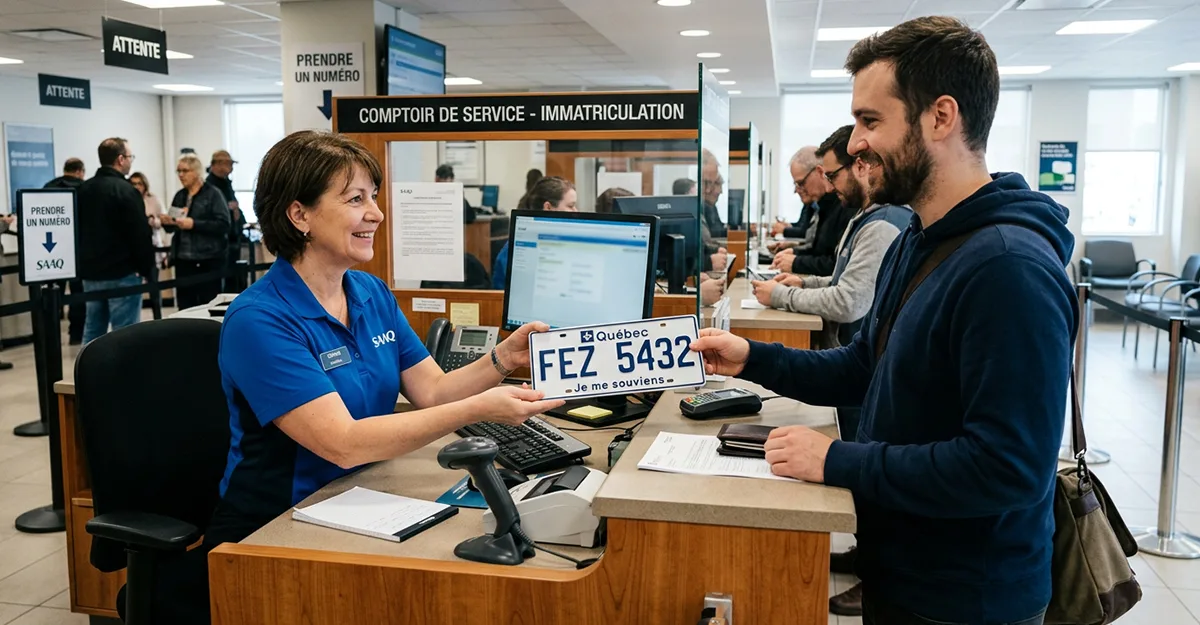
Browse our inventory of inspected used vehicles or explore our financing options: you will leave with a final figure, taxes included, and no surprise at the SAAQ counter, thanks to on-site registration at the dealership.