




Draw on September 1, 2026

You want to sell your car for cash, ideally without spending every weekend on it, and the same question keeps coming back: who will offer the best amount, a dealership, a private buyer or a recycler? The honest answer: it depends on your vehicle, its condition, and how much time you are willing to invest in the transaction.
In this guide, we compare every avenue for turning your vehicle into cash: selling or trading it in at a dealership, selling to a private buyer, sending an end-of-life vehicle to a licensed recycler, and the traps set by unlicensed “fast cash” buyers. And to finish, the simple steps that raise your vehicle’s value before you show it to anyone.

Before choosing who to sell to, know what you are selling. CAA-Québec recommends starting with a list price, obtained for example from recognized value guides such as the Canadian Black Book, then comparing it with listings for similar vehicles in your area: same model, same year, similar mileage. The list price is a good starting point.
Above all, keep in mind that the same vehicle has two very different values. The retail value is what a private buyer would pay for your car, ready to drive. The market value, known as wholesale, is what a dealer can offer, since the dealer will have to cover the inspection, the reconditioning, the warranty and the resale risk. Comparing a dealer’s offer with the retail price of online listings is comparing apples with oranges.
This is the option chosen by people whose priority is to sell their car fast and without hassle. When you search for a “dealership that buys used cars,” what you are really looking for is a licensed vehicle dealer. The process comes down to a few steps: vehicle appraisal, written offer, secure payment, and complete handling of the transfer paperwork by the dealer. No ad to write, no strangers in your driveway, no registration procedures to manage.
If you are replacing your vehicle rather than simply parting with it, trading it in at a dealer comes with a significant financial advantage: in Quebec, the GST and QST are then calculated on the difference between the price of the vehicle you are buying and the value given for your trade-in, not on the full price.
A concrete example: you buy a vehicle listed at $25,000 and the dealer gives you $10,000 for your trade-in. The taxes, at a combined rate of 14.975% (5% GST and 9.975% QST), apply to $15,000 only. The savings come close to $1,500, an amount you should mentally add to the trade-in value when comparing it with a private sale price.
A dealer’s offer reflects wholesale value, not retail price: it will therefore almost always be lower than what a private buyer could pay for the same vehicle. That is the price of speed, security and paperwork handled for you. To understand how that offer is built, and above all how to improve it, read our article on how a dealership appraises your trade-in vehicle and the ways to optimize that appraisal. At Auto Durocher, we buy used vehicles and accept trade-ins; the appraisal is free and the offer does not commit you to anything.
Selling directly to another individual generally gets you the best gross price, close to retail value. In return, you become the dealer yourself: ad, photos, calls, test drives, negotiation, then transfer procedures. Plan on weeks rather than days, and a good dose of patience with no-show buyers, those people who book an appointment and never turn up.
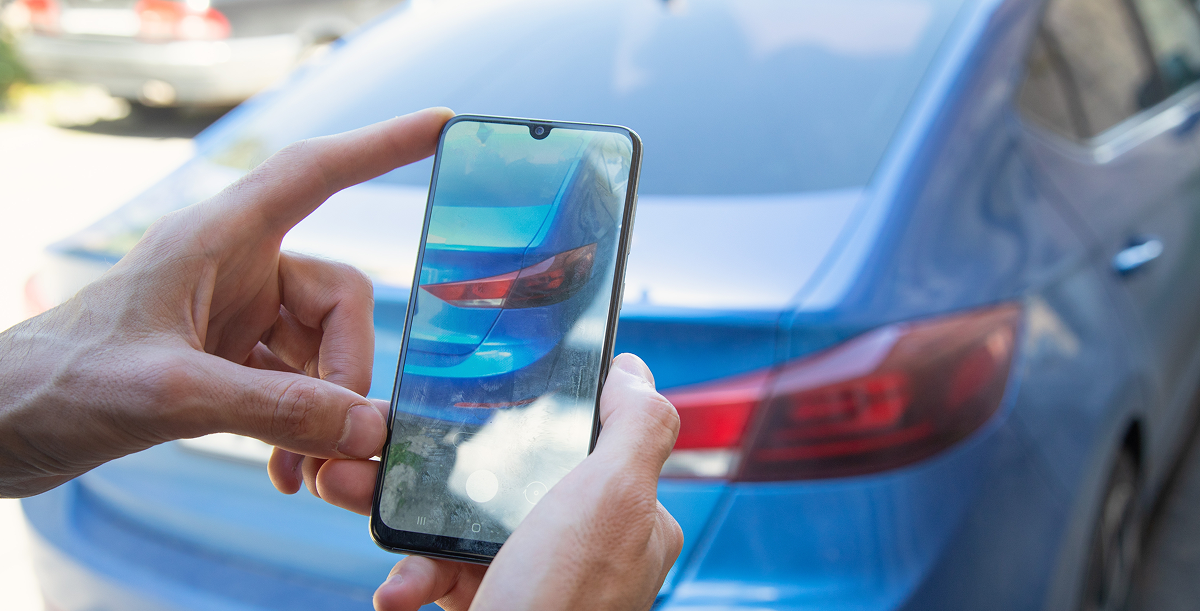
Good news: transferring ownership has become much simpler. For most passenger vehicles registered in one person’s name, the transaction can now be completed entirely online through SAAQclic, the platform of the Société de l’assurance automobile du Québec: the seller initiates the transfer, and the buyer accepts it, pays and registers the vehicle without anyone having to travel. Other cases still go through a service outlet. One crucial point for you as the seller: until the transfer is completed, the vehicle legally remains in your name, along with any tickets and liabilities that may come with it.
On the tax side, the buyer of a used vehicle sold by a private seller pays no GST, but does pay the 9.975% QST to the SAAQ at the time of registration. That tax is calculated on the higher of two amounts: the agreed sale price or the vehicle’s estimated value, which is essentially its wholesale value published in a recognized valuation guide, minus $500. Declaring a price lower than reality therefore does not reduce the buyer’s tax bill; if the vehicle is genuinely damaged, a report from a certified appraiser is what allows the calculation to be adjusted. Know this so you can answer buyers’ questions correctly.
Even between private parties, the sale is clearly regulated. The Civil Code of Québec provides a warranty of quality, often called the warranty against hidden defects: the vehicle sold must not have a serious defect, present before the sale and undetectable by a prudent buyer, that would prevent normal use. A seller can opt out of it by selling “without legal warranty, at the buyer’s own risk,” a statement that must be written clearly into the contract. But be careful: that clause never protects a seller who knew about a defect and concealed it.
Also expect a well-prepared buyer: checks on the vehicle’s history, its mileage and any debts that may be attached to it. We covered all of these checks in our guide on verifying a used car’s history before buying. A seller who provides these documents up front inspires confidence and sells faster.
Quebec police forces document well-honed schemes aimed at vehicle sellers. The classic one: the fake overpayment. A “buyer” hands over a cheque or announces a transfer for more than the agreed price, cites shipping fees, then asks for the difference to be refunded; the initial payment later turns out to be fraudulent and the bank holds you responsible. Another variation: the fake Interac e-Transfer email, imitated to perfection, when no money has actually been sent.
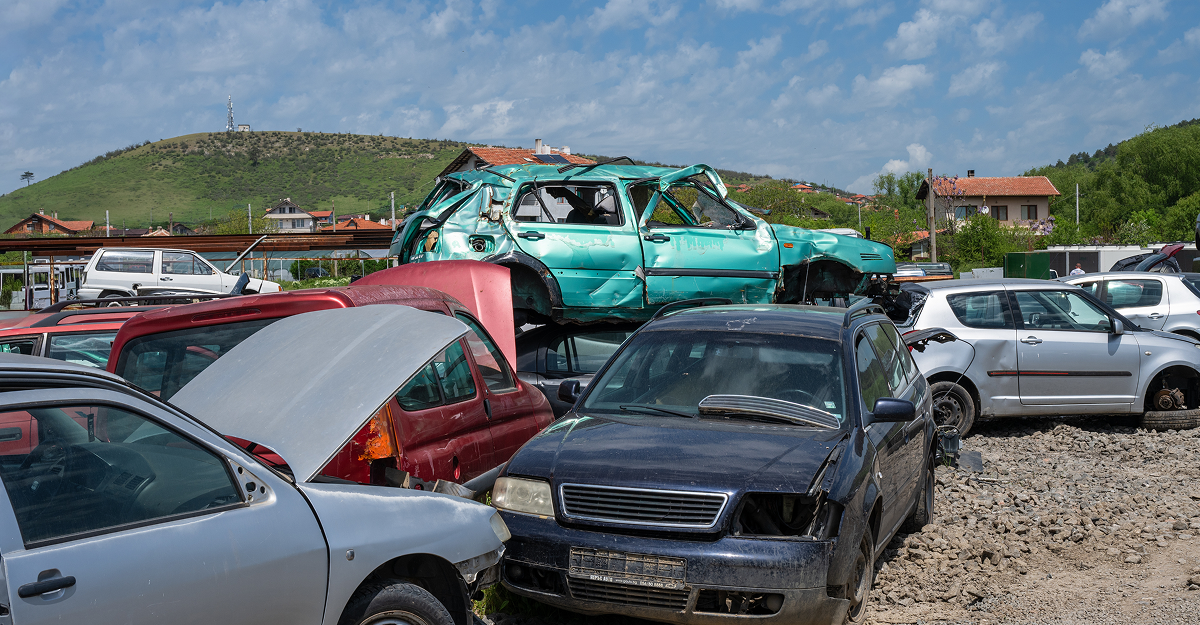
When repairs cost more than the vehicle is worth, when corrosion has pierced the body or the engine has given up, there is still money to be collected. This is what many people call “scrapping your car.” The correct term is an end-of-life vehicle, handed over to an automotive recycler.
Deal only with a licensed recycler: in Quebec, any business that dismantles vehicles or resells their parts must hold a recycler’s licence issued by the Office de la protection du consommateur (OPC), the government agency that oversees merchants. The ARPAC network, Quebec’s association of auto and truck parts recyclers, brings together recognized businesses that depollute vehicles and put their parts back into circulation.
How much can you get? There is no official price scale: the amount depends on the vehicle’s weight, metal prices at the time of the transaction, and the value of recoverable parts such as the catalytic converter, the wheels or the battery. Ask for two or three quotes, confirm whether towing is included, and insist that the ownership transfer be properly completed, with proof in hand. If the environmental angle matters more to you than the amount, ARPAC’s Auto pour l’environnement program also lets you donate the vehicle to benefit an organization, with a tax receipt depending on the organization chosen.
Flyers stapled to utility poles, “we buy your car for cash today” ads, unsolicited messages: buyers in a hurry who promise fast money without asking questions deserve to be asked a few themselves. In Quebec, anyone who buys vehicles to resell or dismantle them must hold a road vehicle dealer’s or recycler’s licence issued by the OPC. Without that licence, no bond protects you and no agency oversees the buyer’s practices.
The risks are concrete: a tempting offer over the phone that gets cut in half when the keys change hands, questionable payment, and above all an ownership transfer that never gets completed, leaving the vehicle, its tickets and its troubles in your name while it keeps driving around or gets resold. Before accepting anything, ask for the licence number and verify it with the OPC. A legitimate buyer is never afraid of paperwork.
Our Auto Durocher advice: always compare net amounts, not promises. Add up a dealer’s written offer and, if you are replacing your vehicle, the tax savings from the trade-in; compare that total with a realistic private sale price, subtracting the time, the procedures and the risks you would have to take on. A written professional appraisal costs nothing and does not commit you to anything: get one before you decide.
Whichever avenue you choose, a few hours of preparation translate directly into money at appraisal time or when a buyer comes to visit:
| Avenue | Amount to expect | Speed and effort | Watch out for |
|---|---|---|---|
| Selling or trading in at a dealership | Market value, plus the tax savings on a trade-in | Very fast, no procedures on your end | Compare more than one written offer |
| Private sale | Best gross price (retail value) | Weeks of effort: ad, visits, transfer | Payment fraud, legal obligations, transfer to complete |
| Licensed recycler (end of life) | Amount based on weight, metals and parts | Fast, towing often offered | OPC licence, proof of transfer, compare quotes |
| Unlicensed “cash” buyer | Often cut at the last minute | Fast in appearance only | Avoid: no oversight and no recourse |
Looking for a simple, secure transaction with no unpleasant surprises? At Auto Durocher, we appraise your vehicle free of charge, give you a clear offer, and our team takes care of all the transfer paperwork, whether you sell us your vehicle or trade it in for one of the models in our inventory of inspected used vehicles.
And if your trade-in comes with a new purchase, our financing options, offered with 18 financial institutions on vehicles sold at Auto Durocher, adapt to your budget, second-chance credit included. Selling fast is good. Selling at the right price, safely, is better.