










Draw on September 1, 2026
You have found a used car whose price finally fits your budget, but the odometer reads 150,000 km and doubt sets in: is it a bargain or a repair bill waiting to happen? That instinct to back away from a high-mileage vehicle is probably the most common reflex among used car shoppers in Quebec. Yet it belongs to another era.
In this guide, we put the odometer back in its rightful place: what mileage really tells you (and what it does not), the factors that matter more, how to calculate the cost per remaining kilometre, the protections Quebec law gives you even on an older vehicle, and the buyer profiles for whom high mileage is often the smartest decision.
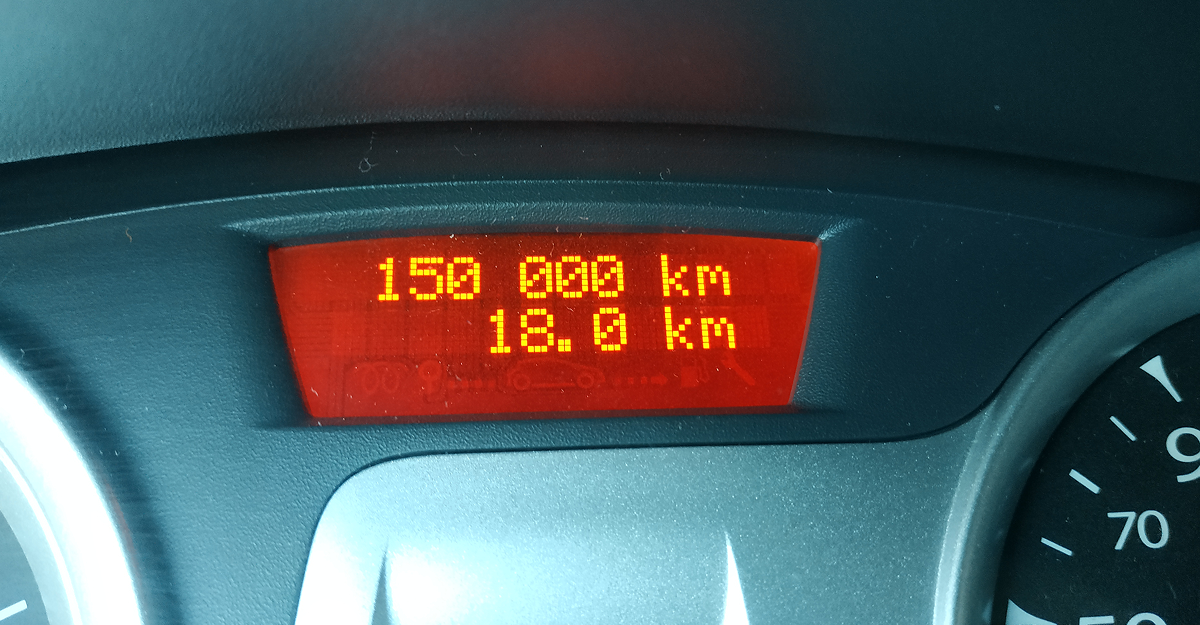
That psychological threshold comes from the cars of the 1980s and 1990s, whose engines and bodies aged much faster. Modern mechanics play in another league. Consumer Reports, the independent American product-testing organization, estimates that many of today’s vehicles reach 320,000 km (200,000 miles) with few major repairs, provided they are rigorously maintained.
Large-scale data points the same way. The 2025 longevity study by the analytics site iSeeCars, based on nearly 400 million vehicles, shows that the most durable models have up to a 39% chance of passing 400,000 km (250,000 miles). Not all models are equal, and the industry average remains more modest, but the message is clear: a well-chosen, well-maintained vehicle still has a long life ahead of it at 150,000 km.
Quebecers have clearly figured this out: according to data from the SAAQ (the Société de l’assurance automobile du Québec, the provincial agency that registers vehicles), the average age of vehicles on Quebec roads reached 10.7 years in 2024, up from 8.4 years in 2019. We are keeping our cars longer than ever. The engine that gives up at 160,000 km has become the exception, not the rule.
There is also an economic reality. In the first quarter of 2026, Canada’s major price indexes placed the average price of a used vehicle between $31,900 and $36,700 depending on the calculation method. For many households, those amounts are out of reach, even with stretched-out weekly payments.
The affordable prices are found precisely in the high-mileage segment: the most significant depreciation has already been absorbed by the previous owners. So the real question is not “how many kilometres are on the odometer?” but “how many kilometres are left, and at what price?”.
The odometer measures a quantity of use, nothing more. Drivers here cover an average of 15,000 to 20,000 km per year; a 2017 or 2018 vehicle showing 150,000 km has simply lived a normal life, neither neglected nor overworked.
What the odometer does not tell you is the quality of those kilometres. It reveals nothing about driving style, the regularity of oil changes, the winters spent without an undercarriage wash, or the kind of trips the vehicle made. Two identical vehicles with the same mileage can be in radically different mechanical condition.
The first factor is the type of use. Highway kilometres are the gentlest there are: the engine stays at its ideal temperature, the revs are steady, and the brakes and transmission are barely worked. City kilometres are the hardest: repeated cold starts, constant stops, potholes, and short trips where the oil never has time to warm up.
In practical terms, a suburban commuter’s car with 180,000 km logged on Highway 15 can be in better mechanical shape than a 90,000 km city car that has never left downtown. Always ask the seller what the vehicle was used for: a highway commute, urban deliveries, towing?
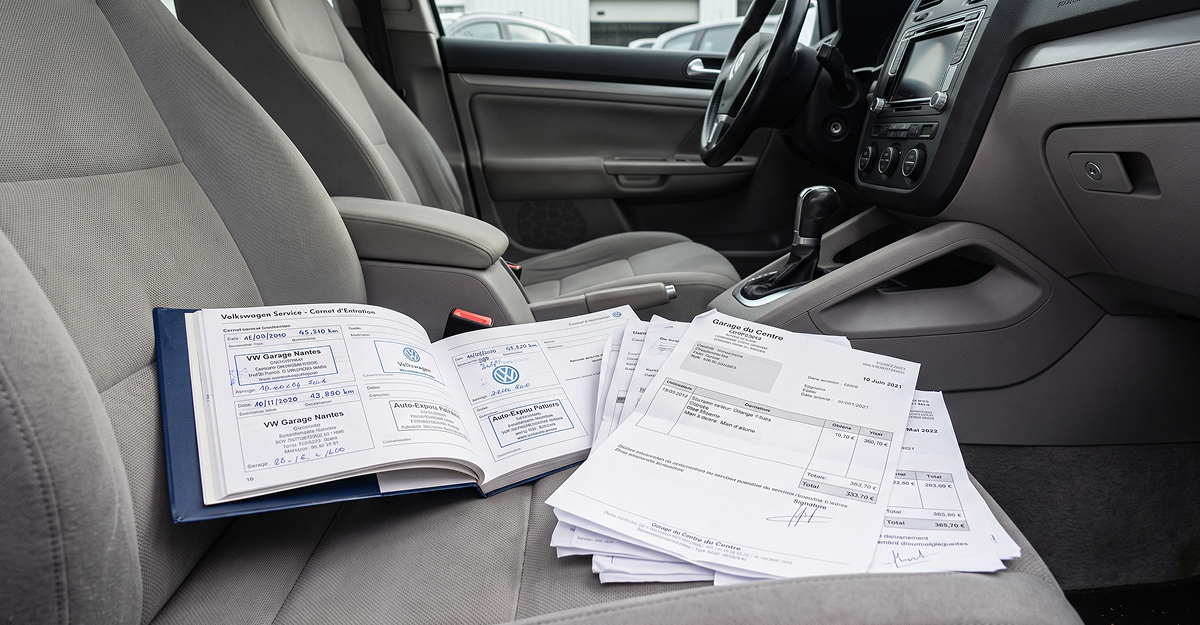
The second factor is the paper trail. A 170,000 km vehicle that comes with its maintenance logbook, invoices for regular oil changes, a timing belt replaced on schedule and recent brakes is a reassuring purchase. The same vehicle with no paperwork at all is a gamble.
Before committing, ask for the complete history: maintenance, insurance claims, provenance. We have devoted an entire guide to checking a used car’s history before you buy. And since not all models age at the same pace, our ranking of the most reliable used vehicles in Canada will help you target the ones that cross the 200,000 km mark without drama.
The third factor is unique to our climate. Between road salt and calcium, our winters attack car bodies and, above all, their undercarriages. Structural corrosion is what truly condemns an older vehicle: a tired engine can be repaired or replaced, but a perforated floor or frame rarely can be at a reasonable cost.
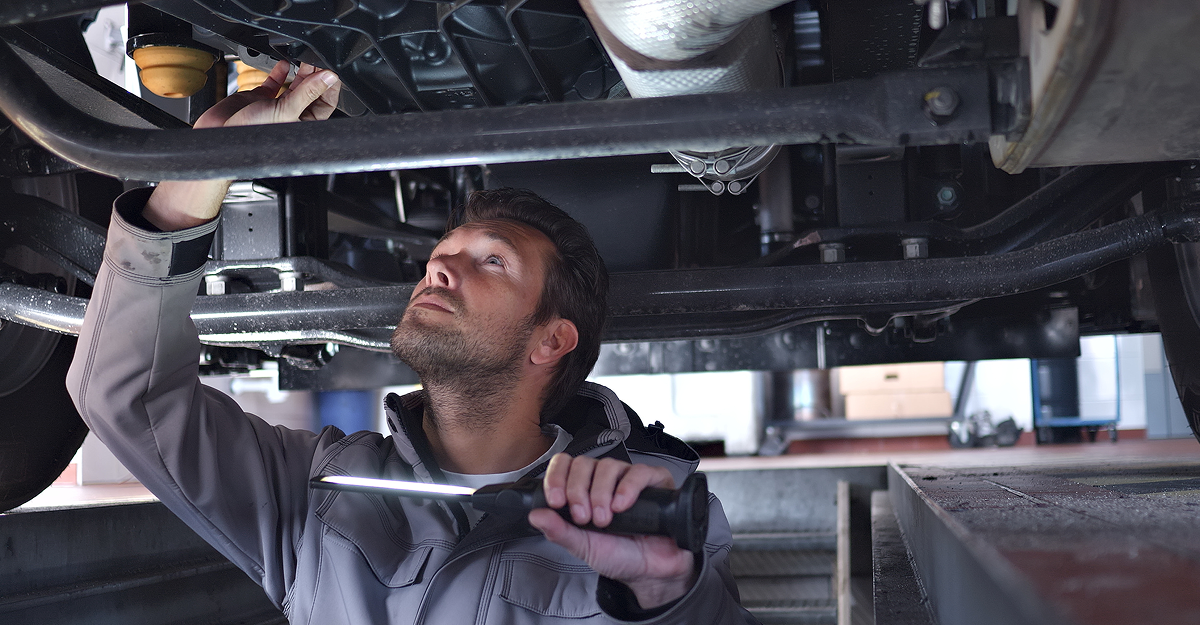
On a high-mileage vehicle, examine the rocker panels, wheel wells, frame rails and suspension mounting points. A 160,000 km vehicle from an owner who washed the undercarriage every spring and applied rustproofing every year can show less corrosion than a vehicle half its age that was never treated. Here again, the mileage tells you nothing, it is the vehicle’s condition that matters.
Here is the calculation that changes the way you shop. Instead of comparing asking prices, compare the price to the kilometres of useful life the vehicle can reasonably be expected to have left, based on the model’s known longevity and its condition.
Take a simplified example. A compact known to last beyond 300,000 km, offered at $9,000 with 170,000 km on the odometer, has about 130,000 km of useful life left: around 7 cents per kilometre in purchase cost. The same model in a recent version, sold at $22,000 with 80,000 km, offers 220,000 km of remaining life: 10 cents per kilometre. The vehicle that costs less to buy is also, in this scenario, the cheaper one per kilometre.
Let’s be nuanced: this calculation does not account for repairs, which come sooner on an older vehicle. Set aside a monthly maintenance cushion. If a transmission at the end of its life gets added to the bill, the gap closes quickly. But when the mechanics are sound and the maintenance is documented, the high-mileage vehicle often wins the calculation, on top of costing less in depreciation and in insured value.
Our Auto Durocher advice: never compare two vehicles on the asking price alone. Divide the price by the kilometres the model can reasonably be expected to have left, drawing on longevity studies and the maintenance history, and keep a reserve for repairs. A well-maintained $9,000 vehicle often beats an overpriced recent one; a rusted vehicle never beats anything, whatever its price.
Good news: buying from a dealer, even a vehicle with very high mileage, does not leave you unprotected. The Consumer Protection Act (the Quebec law that governs merchants, enforced by the Office de la protection du consommateur, Quebec’s consumer protection agency) first imposes a warranty of good working order on used vehicles sold by a dealer, under categories that were broadened as of April 5, 2024:
| Category | Eligible vehicle | Warranty duration |
|---|---|---|
| A | 4 years old or less and no more than 80,000 km | 6 months or 10,000 km |
| B | 5 years old or less and no more than 100,000 km | 3 months or 5,000 km |
| C | 7 years old or less and no more than 120,000 km | 1 month or 1,700 km |
| D | More than 7 years old or more than 120,000 km | No warranty of good working order |
A 150,000 km vehicle falls into category D. Does that mean it is sold without a safety net? No. The legal warranty continues to apply, whatever the age and mileage: the vehicle must be fit for normal use and last a reasonable length of time, given the price paid, the terms of the contract and the way it is used. It is also protected against latent defects, meaning serious flaws that existed at the time of sale but were invisible to an ordinary examination.
In other words, the law adjusts its expectations: an $8,000 car with 180,000 km is not held to the same endurance standard as a nearly new vehicle, but it must last a reasonable time for its price. And the words “sold as is” do not erase this protection when you buy from a dealer. To understand how this warranty fits with paid protections, see our comparison of the legal warranty versus the extended warranty for a used vehicle.
At high mileage, certain checks become essential. A pre-purchase inspection by an independent mechanic generally costs $100 to $250, one of the best investments in your entire shopping process. Pay particular attention to the following:
At Auto Durocher, we inspect and test every vehicle before putting it up for sale, and we show you its history with complete transparency, precisely because a high-mileage purchase is built on trust.
A well-chosen high-mileage vehicle is a particularly good fit for certain profiles:
Conversely, if you drive 40,000 km a year for work, if your schedule cannot tolerate any downtime, or if you have no margin to absorb a repair, a more recent vehicle still covered by a warranty remains the prudent choice. The right purchase depends on your usage, not on a number on the dashboard.
High mileage is neither a good nor a bad idea in itself: it is an opportunity worth seizing when the maintenance, the usage and the condition of the vehicle line up. At Auto Durocher, we believe a tight budget deserves the same consideration as a big one: our inventory of inspected used vehicles covers every price and mileage range, from nearly new models to high-mileage bargains, with the same commitment to transparency.
And if budget is at the heart of your decision, our financing options, offered with 18 financial institutions on vehicles sold at Auto Durocher, adapt to the payments you can genuinely afford, second-chance credit included. High mileage is a story. Documented maintenance is proof.