Wednesday July 1st – our Sales Department will be open, from 9 a.m. to 8 p.m. Only this department will be available. We look forward to seeing you!

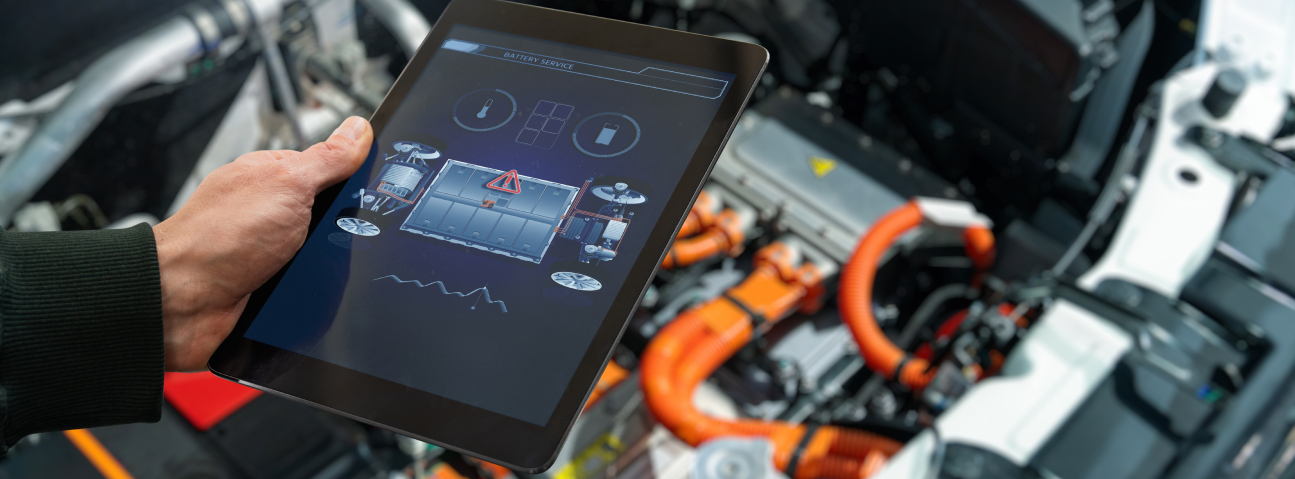
Switching to an electric vehicle changes many habits, especially how you refuel and plan your trips. Maintenance evolves as well. Since there are no engine oil changes, spark plugs, or exhaust systems to maintain, garage visits are generally less frequent, and several mechanical procedures disappear completely. However, this does not mean an electric vehicle can be driven for years without being checked.
In Quebec, the cold, salt, potholes, and major temperature swings put heavy demands on tires, brakes, suspension, bodywork, and thermal management systems. To preserve your vehicle’s reliability, driving range, and resale value, you must adopt a routine tailored to its technology and our climate. Here are the main elements to watch out for to properly maintain an electric vehicle in Quebec.
A fully electric vehicle has far fewer moving parts than a gas-powered vehicle. It has no internal combustion engine, exhaust system, timing belt, fuel filter, or spark plugs. The traction battery, electric motor, and power electronics generally require little periodic maintenance, which helps lower operating costs.
However, routine operations do not all disappear. Tires, brakes, steering, suspension, bearings, windshield wipers, the cabin air filter, and the 12-volt battery are still present. Some models also use multiple cooling circuits to control the temperature of the battery, motor, and electronic components.
The maintenance schedule varies greatly from one manufacturer to another. One model may require a periodic check of the coolant, while another schedules its replacement after several years. The owner’s manual and the manufacturer’s maintenance program must remain your primary references, especially to protect a warranty that is still in effect.
The high-voltage battery is the most important and expensive component of an electric vehicle. It is designed to function for many years, and its management system continuously controls temperature, charging, and discharging. A gradual loss of capacity is normal, but a sudden drop in range, unusual discrepancies in the displayed estimate, or a warning light must be examined quickly.
On a daily basis, many manufacturers recommend keeping the charge within an intermediate range when the full driving range is not needed. A target of about 20% to 80% is suitable for many models, while a 100% charge can be reserved for long trips. However, the exact recommendations differ based on the battery’s chemistry and the vehicle’s software, so always rely on the parameters provided by the manufacturer.
Fast charging is very practical on the road, but it does not need to become your only charging method. For daily use, a Level 2 home charging station generally offers a good balance between speed and convenience. Charging power usually decreases as the battery approaches its full capacity.
The thermal system also plays an essential role. On many vehicles, the air conditioning and cooling circuits help maintain the battery within an appropriate temperature range. A defective air conditioner, a fluid leak, or a temperature-related warning should therefore not be considered a simple comfort issue.
If you leave the vehicle unused for several weeks, consult the manufacturer’s storage instructions. Some models must remain plugged in, others recommend a specific charge level, and several advise against prolonged storage with a battery that is nearly empty or completely full. Following these instructions can also affect the warranty.
The cold does not necessarily cause permanent degradation to the battery, but it temporarily reduces its efficiency. At -18 °C, Natural Resources Canada indicates an average driving range reduction of about 29%, though the actual result varies depending on the model, speed, wind, tires, heater usage, and type of trip. It is therefore prudent to keep an extra buffer on very cold days.
Preheating is one of the most useful habits. While the vehicle is plugged in, program the cabin heating before your departure to use grid electricity rather than battery energy. Depending on the model, this function can also warm up the battery and improve available power or charging speed.
For a long trip, use the vehicle’s navigation system when it can automatically precondition the battery before arriving at a fast charger. A very cold battery often accepts less power, which prolongs charging time. Also, keep the charging port clean and gently remove snow or ice, without using metallic objects or forcing a frozen cable.
Do not forget the auxiliary 12-volt battery. It powers the accessories and systems necessary to activate the high-voltage battery. If it is weakened, the vehicle can be immobilized even when the traction battery is fully charged.
Regenerative braking slows the vehicle using the electric motor and recovers a portion of the energy to return it to the battery. The brake pads and discs are therefore often used less than on a gas-powered vehicle. This reduction in wear is advantageous, but it can also promote rust accumulation on the discs and cause certain parts to seize up.
In Quebec, humidity, salt, and road abrasives make brake inspections particularly important. CAA-Quebec recommends having the braking system inspected at least once a year and mentions that a cleaning once or twice a year can be appropriate for an electric vehicle. The technician will be able to check the pads, discs, calipers, sliders, and brake lines.
The brake fluid must also be monitored. It gradually absorbs moisture, which can reduce its performance and promote internal corrosion. Some manufacturers specify a fixed replacement interval, while others request a periodic analysis of its condition instead.
The tires on an electric vehicle work hard. The battery often increases the vehicle’s weight, and instant torque can accelerate wear when departures are frequent and vigorous. Inadequate wheel alignment, under-inflation, or neglected tire rotation can then quickly reduce the lifespan of the tread.
Check the pressure at least once a month when the tires are cold, using the value indicated on the door jamb sticker or in the manual. Pressure decreases when the temperature drops, and an under-inflated tire increases rolling resistance, which negatively impacts handling, wear, and driving range. The pressure warning light does not replace regular manual checks.
Also monitor wear from one side of the tire to the other. Irregular wear can signal an alignment, suspension, or pressure issue. A tire rotation performed according to the schedule provided by the manufacturer helps balance wear, particularly on two-wheel-drive models where the drive axle may be under greater demand.
In Quebec, winter tires are mandatory from December 1st to March 15th for vehicles covered by the regulations. Choose a size, load index, and speed rating compatible with your vehicle. A tire carrying a specific designation for electric vehicles is not always mandatory, but the chosen product must be able to support the weight, torque, and characteristics of the model.
An electric vehicle does not need engine oil, but it still contains several fluids. Depending on the model, you might find coolant for the battery and electronics, brake fluid, windshield washer fluid, reducer or transmission fluid, and refrigerant for the air conditioning. Their quantity, lifespan, and replacement method vary by manufacturer.
The cooling circuit deserves special attention. A leak, a fluid level that is too low, or a defective pump can affect the thermal management of the battery and power components. Because these systems can be complex and are linked to high voltage, their diagnosis should be entrusted to technicians with the appropriate equipment and training.
The cabin air filter must also be replaced periodically. A clogged filter reduces airflow, puts more strain on the ventilation system, and hinders defrosting. In an electric vehicle, where heating can have a significant influence on winter driving range, an efficient ventilation system contributes directly to comfort and safety.
The weight of an electric vehicle can put more strain on certain suspension components, especially on damaged roads. Potholes can affect wheel alignment, wheels, bearings, shock absorbers, and suspension arms. A steering wheel that pulls to one side, vibrations, or uneven tire wear are signs that should not be ignored.
A visual inspection during tire changes is a good opportunity to check the suspension and steering parts. The technician can look for play, damaged boots, shock absorber leaks, or traces of impact. Correcting an alignment quickly protects the tires and helps maintain stable energy consumption.
An electric vehicle is not protected against rust. Salt, moisture, and road residue accumulate on the chassis, brake components, and body panels just like on any other vehicle. Frequent washing, including under the vehicle when conditions permit, helps eliminate contaminants that accelerate corrosion.
A rust proofing treatment can be considered, but it must be compatible with the manufacturer’s recommendations. The battery is often installed under the floor, and several high-voltage components, sensors, drains, and ventilation openings must remain accessible. Consult the manual and choose a shop that understands the precautions specific to electric vehicles.
Take advantage of seasonal changes to inspect the seals on the doors, trunk, and charging door. A product designed for automotive seals can prevent drying out and reduce the risk of them sticking during a freeze. Also, have paint chips repaired quickly, especially near the wheel wells and rocker panels.
Your charging equipment must remain in good condition. Examine the cable, handle, pins, and station enclosure to spot cracks, traces of overheating, corrosion, or abnormal play. A damaged connector, charging that interrupts frequently, or an outlet that becomes hot must be checked without delay.
In winter, avoid leaving the connector in a puddle, under a snow accumulation, or in a spot where it risks being run over. Store the cable without bending it sharply and protect the handle when it is not in use. Do not apply products or lubricants to the electrical contacts unless the manufacturer expressly recommends it.
The installation of a 240-volt residential charging station should be entrusted to a master electrician. They can check the panel capacity, the circuit, the electrical protection, and the compliance of the installation. An outdoor station must also be designed to withstand Quebec weather conditions.
There is no universal schedule, but a seasonal routine constitutes a good starting point. In the spring and fall, take advantage of the tire change to have the brakes, suspension, steering, and the general condition of the vehicle’s underside inspected. Also check the wipers, washer fluid, lighting, and seals.
Every month, check the pressure and condition of the tires. Pay attention to dashboard messages, abnormal range variations, and charging operation. Before winter, have the 12-volt battery tested and ensure that the heating, defrosting, and air conditioning function correctly.
An annual inspection allows you to spot problems that are not visible on a daily basis. Its content must be adapted to the model, its mileage, and the manufacturer’s requirements.
Finally, keep all your invoices and reports. A clear maintenance record makes it easier to track the warranty and can reassure a future buyer. For a used electric vehicle, it is also relevant to document the battery’s state of health, repair history, updates performed, and completed recalls.
Before buying, do not limit yourself to the driving range advertised on the dashboard. Request an evaluation of the battery’s state of health, check the remaining warranty, and compare the real range with the model’s normal specifications. An inspection tailored to electric vehicles can also check the charge management system, the plug, the electronic modules, the brakes, and the general condition of the vehicle.
Verify that the provided cable and adapters are present and functional, then confirm the vehicle’s compatibility with the charging stations you plan to use. Also examine the tires, as replacing them can represent a major expense shortly after purchase.
Consult the maintenance history, the vehicle report, and the recalls applicable to the vehicle identification number. Transport Canada recommends checking for recalls before buying a used vehicle and confirming with the manufacturer or an authorized dealer if the repairs have been carried out.
The electric vehicle eliminates several expensive mechanical procedures and generally requires less maintenance than a gas-powered model. It is nevertheless necessary to carefully monitor the battery, brakes, tires, fluids, suspension, corrosion, and charging equipment. In Quebec, a seasonal routine and compliance with the manufacturer’s program are the best ways to preserve its safety, driving range, and value.
At Entrepôt Auto Durocher, we help you choose a used vehicle adapted to your commutes, your budget, and the reality of Quebec roads. Our vehicles are inspected and tested to offer you a transparent buying experience without bad surprises. Our team also takes the time to answer your questions to allow you to make an informed choice, whether it is an electric, hybrid, or gas vehicle.
Discover our inventory of used vehicles and talk with our team to compare the models that truly meet your needs.

This payment estimation tool is for informational purposes only and does not constitute a credit offer within the meaning of the Consumer Protection Act (CQLR c. P-40.1). The amounts displayed are estimates only and may differ from the actual terms that will apply to the credit contract.
The selling price, credit rate, and actual payments will be determined at the time a written contract is concluded in accordance with applicable legal requirements.
Any financing offer is subject to credit approval by a third-party financial institution, in accordance with applicable lending criteria. The consumer may not qualify for the estimated credit rate displayed.
The displayed price is based on the base price established by Auto Durocher. It excludes, among other things:
While we make every effort to ensure the accuracy of the information, errors may occur. Consumers are encouraged to contact Auto Durocher directly for complete and up-to-date information.
The credit rates displayed are provided for information purposes only. The actual annual percentage rate (APR) will be disclosed in accordance with the Consumer Protection Act in the credit contract.
The applicable rate will depend, among other factors, on:
Not all consumers will qualify for the lowest available rates. Certain conditions, restrictions, and eligibility requirements apply.
The estimated payment represents an approximation of periodic payments (principal and cost of credit) for an instalment credit contract relating to a used vehicle.
The actual payments will be set out in a written contract specifying, in particular:
in accordance with applicable provisions of the Consumer Protection Act.
The displayed amounts do not include certain fees, including administration fees, security registration fees, and other fees permitted by law.
Weekly payments are calculated based on the equivalent monthly payments using an annualization method, divided over fifty-two (52) weeks. This method is provided for estimation purposes only and may differ from the method used in the final contract.
Consumers are encouraged to consult Auto Durocher to obtain full disclosure in compliance with legal requirements before entering into any agreement.