







Draw on September 1, 2026
The used electric vehicle (EV) market in Quebec is undergoing a major transition phase in 2025 and 2026, marked by a convergence between the technological maturity of first- and second-generation models and changes in legislative frameworks and incentives.
As the province has established itself as a leader in electromobility—driven by privileged access to hydroelectric power and proactive public policies—Quebec buyers now face a more diverse second-hand inventory than ever before. It can therefore be difficult to make the right choice when purchasing a used electric vehicle.
The importance of this guide is also highlighted by the depreciation trajectory of new EVs. Data from CAA-Québec indicates that an electric vehicle loses approximately 30% of its market value within the first year after its initial purchase. For informed consumers, this drop represents an opportunity to access advanced technology at a reduced acquisition cost, while benefiting from savings associated with electric powertrains.
The year 2026 represents a window of opportunity for purchasing an electric vehicle in Quebec. The provincial “Roulez vert” program, a cornerstone of EV adoption since 2012, is entering its final phase.
For the current fiscal year, incentives for used vehicles have been revised to $2,000. This amount will disappear entirely in 2027. At the same time, the federal government has introduced the Incentives for Zero-Emission Vehicles (iZEV) program, offering up to $5,000 for new models meeting certain price caps. This puts downward pressure on both new and used vehicle prices to remain competitive
| Program Type | 2025 Status | 2026 Status | 2027 Status |
| Roulez vert (New) | $4,000 | $2,000 | $0 |
| Roulez vert (Used) | $2,000 | $1,000 | $0 |
| Charging Station Grant (Residential) | $600 | $600 | Unknown |
| Federal Incentive (iZEV) | Up to $5,000 | Up to $5,000 | TBD |
Inspired by used SUV market analyses, we evaluate each model based on two axes: economic value (depreciation, charging costs, access to incentives) and technological integrity (battery reliability, winter performance, electronics).
In Quebec, “reliability” is not only measured by the absence of breakdowns, but also by the consistency of range under extreme temperature fluctuations. According to J.D. Power’s Consumer Report, consumers primarily seek third-party validation combined with real-world performance data. For EVs, this translates into the use of data—such as that provided by Geotab—which reveals an average battery degradation rate of 2.3% per year across the entire electric vehicle fleet in 2025.
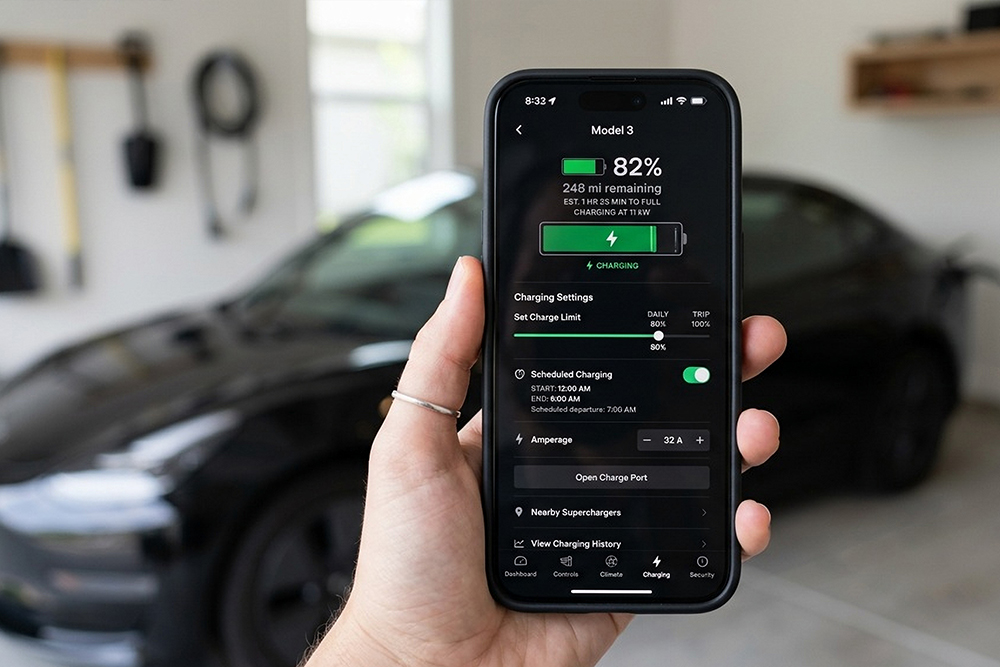
The Tesla Model 3 remains the benchmark in the used market, both in terms of sales volume and technological leadership in thermal management.
The introduction of the “Octovalve” system and heat pump in 2021 significantly improved its suitability for Quebec’s climate. Earlier models (2017–2020) used resistive heating, resulting in significant winter range loss. Post-2021 versions retain about 70% of their range at -7°C and dominate fast-charging performance.
By 2026, used Model 3 prices have stabilized around $30,451, making even the Long Range version attractive for frequent travel between Montreal, Quebec City, and Gatineau.
Overall reliability, according to Consumer Reports, has also improved significantly, with Tesla climbing eight positions in the reliability rankings in 2026 to reach 10th place.
| Parameter | 2018-2020 Model | 2021-2023 Model | 2024-2026 Model (Refresh) |
| Average Price (Used) | $18,000 – $23,000 | $26,000 – $34,000 | $38,000 + |
| Winter Range (Real-World) | ~280 km | ~350 km | ~410 km |
| Thermal Technology | Resistive Heating | Heat Pump / Octovalve | Software-optimized Octovalve heat pump |
| Reliability (Consumer Reports) | Average (Noise, Fit & Finish) | Above Average | Excellent |
| Charging Speed (DCFC) | 120-170 kW | 170-250 kW | 250 kW |
One of the Model 3’s strategic advantages lies in access to Tesla’s Supercharger network, which remains the most reliable and best integrated in Quebec, despite the gradual opening of CCS chargers via adapters.
Users report that the vehicle’s ability to precondition its battery while en route to a charging station helps maintain high charging speeds even in extreme cold, a factor that reduces anxiety during long winter trips.
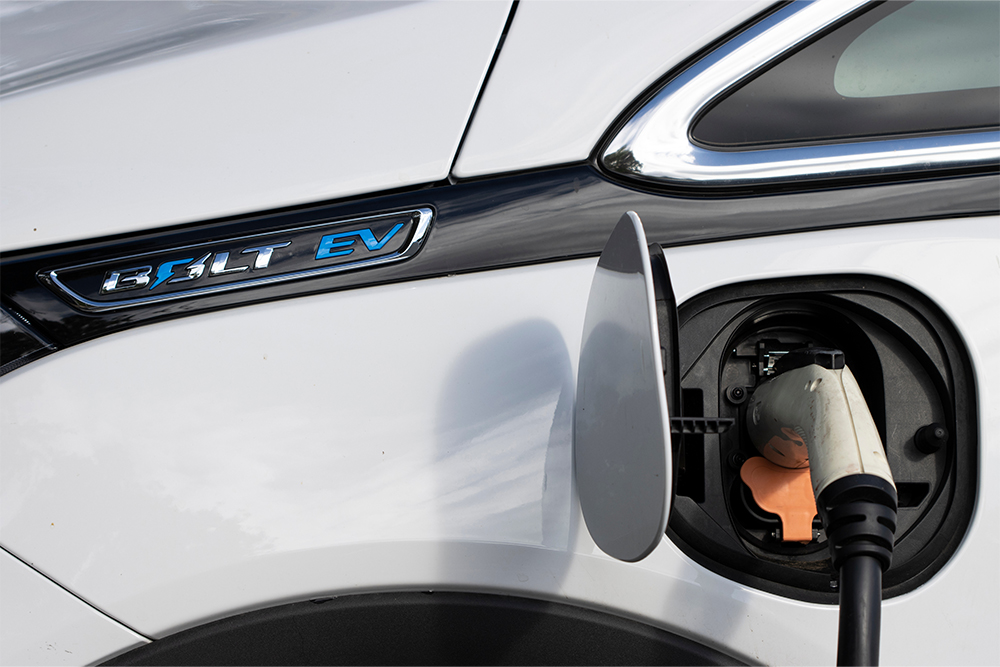
For many Quebec households, the Chevrolet Bolt (EV and EUV) represents the most rational purchase. Starting at $18,999, it offers a range of 417 km—unmatched in its price range.
A crucial data point for used car buyers is the battery recall. A large portion of the inventory available on the secondary market is equipped with new battery modules installed between 2022 and 2024, effectively resetting the warranty on the vehicle’s most expensive component. This creates a market anomaly where a 2019 vehicle may have a technically healthier battery and better warranty coverage than a competing 2021 model.
However, the Bolt is not without its compromises. Its fast-charging speed is capped at 55 kW, which is considered slow by 2026 standards. That said, for users who primarily charge at home using a Level 2 charger, this drawback is largely offset by nearly zero maintenance costs.
Owner testimonials also highlight that even after 180,000 km, mechanical interventions are often limited to cabin filters and preventive brake maintenance, as the brakes can oxidize due to reduced use—thanks to the model’s efficient regenerative braking system.
| Feature | Chevrolet Bolt EV | Nissan LEAF (62 kWh) | Hyundai Kona Electric |
| Summer Range | 417 km | 363 km | 415 km |
| Thermal Management | Liquid (Active) | Air (Passive/Limited) | Liquid (Active) |
| Fast Charging Connector | CCS | CHAdeMO (Declining) | CCS |
| Base Used Price | $18,999 | $14,488 | $22,500 |
| Battery Reliability | Excellent (Post-recall) | Average (Air-cooled degradation) | Good (Post-recall) |
Despite its older charging technology, the Bolt offers greater “peace-of-mind value” than the Nissan LEAF, whose CHAdeMO connector is becoming increasingly marginal in Quebec and whose air-cooled battery is more prone to accelerated degradation during summer heatwaves or repeated fast-charging sessions.
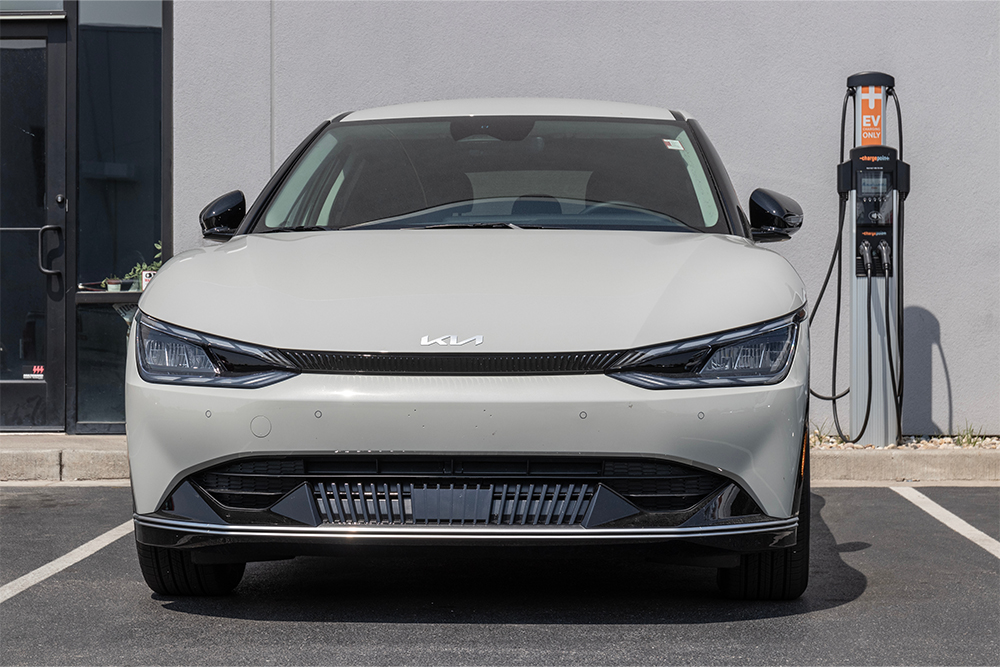
The South Korean “cousins,” built on the E-GMP platform, occupy the upper segment of the used vehicle market. They stand out thanks to their 800-volt electrical architecture, enabling theoretical charging speeds of up to 350 kW. Under optimal conditions, charging from 10% to 80% takes only 18 minutes, positioning these vehicles as direct substitutes for internal combustion vehicles for long-distance travelers.
However, real-world user experience in Quebec reveals important nuances. In winter, the Ioniq 5 has shown particular vulnerability, recording a 36% range loss in CAA tests—one of the largest drops in its segment. Additionally, without battery preconditioning (absent in some base 2022 models), charging speeds drop drastically in cold weather, effectively eliminating the advantage of the 800V system.
A critical point of attention for buyers of used Ioniq 5, Ioniq 6, and Kia EV6 models is the Integrated Charging Control Unit (ICCU). This component has been the subject of numerous failure reports, sometimes resulting in total power loss or an inability to recharge the 12-volt battery. Although software and hardware recalls were deployed in 2024 and 2025, it is essential to verify that the vehicle has received all necessary updates.
| Model | Max Theoretical Speed | km Added in 15 min (Winter) | 10–80% Time (Winter) |
| Tesla Model 3 | 250 kW | 205 km | 37 min |
| Hyundai Ioniq 5 | 350 kW | 64 km | 45 min |
| Kia EV9 | 210 kW | 105 km | 33 min |
| Polestar 2 | 150 kW | 120 km | 40 min |
| Volkswagen ID.4 | 135 kW | 112 km | 34 min |
These data highlight a counterintuitive reality for the Quebec market: a high maximum charging power on paper does not guarantee superior performance in winter conditions.
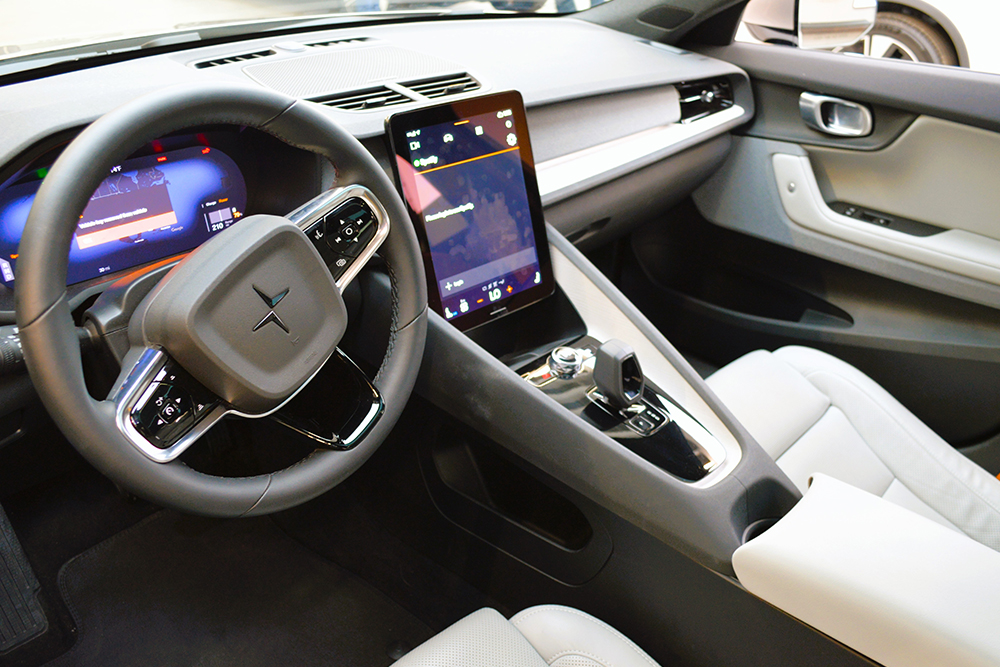
Often perceived as a niche alternative, the Polestar 2 emerged in 2025 as one of the best used electric vehicle choices in Quebec, particularly for those who prioritize winter driving.
Rigorous CAA/BCAA tests ranked the Polestar 2 at the top of its category for range retention, with a loss limited to just 14% at temperatures ranging between -7°C and -15°C.
This performance is attributed to an optimized heat pump and battery chemistry designed for colder climates. On the secondary market, the Polestar 2 benefits from a relative scarcity effect which, paradoxically, can create attractive opportunities, as it is less sought after by the general public than the Tesla Model 3.
Its Android Automotive operating system, natively bilingual and seamlessly integrated with charging navigation apps, makes it an exceptional companion for Quebec’s roads.
The fear of having to replace a $20,000 battery is the main barrier to purchasing a used EV. However, a Geotab study covering more than 22,700 vehicles in 2025 provides reassuring conclusions. The annual degradation rate has stabilized at 2.3%, meaning that after 10 years, most vehicles still retain nearly 80% of their original capacity.
The analysis does, however, identify usage behaviors that accelerate this decline. Heavy use of fast charging (DCFC) is the most significant stress factor. Vehicles relying on DCFC for more than 12% of their total charging sessions see their annual degradation increase from 1.5% to 2.5%.
For Quebec buyers, this means that a vehicle previously owned by an urban driver who primarily charged at home (Level 2) will have higher intrinsic value than a vehicle used commercially and heavily reliant on 100 kW+ fast chargers.
| Usage Factor | Low Degradation Rate | High Degradation Rate | Difference |
|---|---|---|---|
| Fast Charging Frequency | <12% of sessions (1.5%) | >12% of sessions (2.5%) | +1,0% |
| Charging Power | Low power (1.5%) | High power >100 kW (3.0%) | +1,5% |
| Operating Climate | Temperate/Cold climate | Very hot climate | +0,4% |
| Vehicle Type | Passenger car (2.0%) | SUV/Truck (2.7%) | +0,7% |
These data suggest a positive implication for Quebec: our cooler climate, while penalizing immediate winter range, actually benefits the long-term longevity of battery cells, unlike the arid climates of the southern United States, which accelerate thermal degradation.
The analysis of 2025–2026 data provides clear conclusions for purchasing a used electric vehicle in Quebec. The market has reached a point of equilibrium where the reliability of major components (motor, battery) is proven for most leading models, but where winter performance remains the key differentiating factor.
For the “Budget and Urban Practicality” profile, the Chevrolet Bolt EV remains the ideal choice. Its post-recall battery resilience and low purchase price provide a quick return on investment, despite limited charging speed.
For the “Technology and Long Distance” profile, the Tesla Model 3 (post-2021) stands out thanks to its software integration, efficient Octovalve system in winter, and access to the most robust charging network in the province.
For the “Winter Performance and Distinction” profile, the Polestar 2 stands as the best technical option, capable of handling temperatures down to -20°C with minimal capacity loss, while offering a premium driving experience that is increasingly accessible on the used market.
We also recommend completing your purchase before the end of 2026 to benefit from the final amounts of the Roulez vert program, while paying close attention to battery health reports and maintenance history—key elements that will define future resale value.
roulonselectrique.ca
Véhicules électriques d’occasion
electricautonomy.ca
Quebec reopens EV rebate program, introduces new tax for 2027
beqtechnology.com
Subsidies available for EVs and charging stations in 2026 – BEQ Technology
gowlingwlg.com
Auto alert! Quebec decreases electric vehicle incentives – Gowling WLG
quebec.ca
Amount of the financial assistance for a used electric vehicle | Gouvernement du Québec
geotab.com
EV Battery Health: Key Findings from 22,700 Vehicle Data Analysis …
recurrentauto.com
Best EV for Winter & Cold Weather Range – Recurrent
recharged.com
Used Tesla Model 3 vs New Hyundai IONIQ 5 (2026 Guide) – Recharged
bgr.com
Consumer Reports Says This Is The Most Satisfying EV Brand To Drive – BGR
roulezelectrique.com
Est-ce que l’IONIQ 5 est meilleure que ma Bolt EUV ? (Suite et fin) | Roulez Électrique
recharged.com
Least Reliable Used Electric Cars to Avoid in 2026 – Recharged
guideautoweb.com
Consumer Reports Says Most Reliable EVs Come From Tesla, Nissan – Le Guide de l’auto
autohebdo.net
Les meilleurs véhicules électriques abordables à se procurer en 2025 | AutoHebdo.net
bgr.com
9 Popular Electric Cars That Aren’t Worth Buying, According To Consumer Reports – BGR
forums.automobile-propre.com
Avis Ioniq 5 – Hyundai – Forums Automobile Propre
aveq.ca
Mon choix pour la Ioniq – AVÉQ
aveq.ca
Les essais de véhicules électriques en forte hausse à L’International de l’auto de Québec – AVÉQ
hellodarwin.com
Roulez Vert — Used vehicle rebate | Program Guide 2026 – helloDarwin