
Are you shopping for a used car and have you heard that the Bank of Canada just raised its policy rate? You are probably wondering whether your weekly payment will go up, whether your current loan is affected and whether now is still a good time to buy. These are fair questions, because a rate increase, even a modest one, eventually shows up in the cost of financing.
In this article, we explain what changed on October 28, 2026, how the policy rate is passed on to car loans, what the increase represents in dollars on a typical weekly payment, and why the used vehicle market currently offers a welcome counterweight. We finish with practical ways to limit the effect of the increase on your budget.
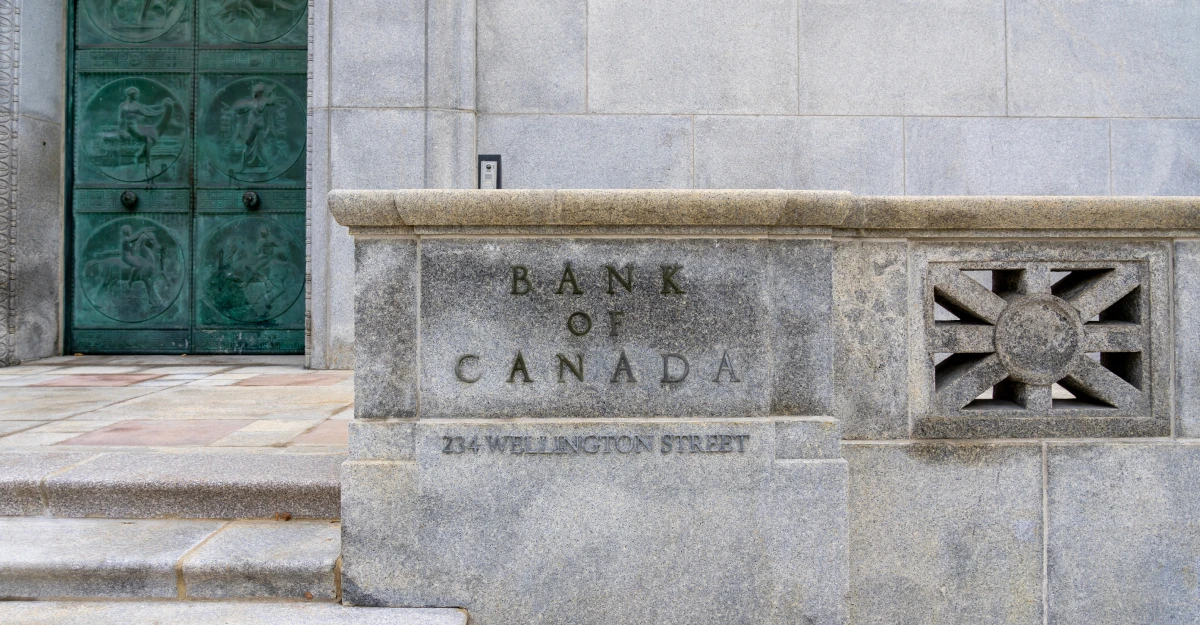
On October 28, 2026, the Bank of Canada raised its policy rate (the Bank of Canada key interest rate) by 25 basis points, in other words by a quarter of a percentage point, bringing it to 2.50%. This is the first increase since July 2023, after a long cycle of cuts followed by pauses.
The Bank attributes its decision to inflation that is higher and more persistent than expected. It expects inflation to reach about 3.5% by the end of 2026 and to hover around 3% for most of 2027, mainly because of energy prices. The Bank’s official target is 2%, so it is tightening its policy to keep these price increases from spreading to the rest of the economy.
The policy rate, also called the target for the overnight rate, is the interest rate at which major financial institutions lend funds to one another for one day; it serves as the benchmark for most other rates in the country. When the Bank of Canada raises it, borrowing becomes more expensive for financial institutions, and they generally pass this increase on to their customers.
The most direct transmission is through the prime rate, which is the base rate each institution uses to calculate its variable-rate loans. The day after the announcement, Canada’s major banks raised their prime rate from 4.45% to 4.70%, according to Ratehub. Fixed rates, for their part, depend more on institutions’ longer-term funding costs, so they react more gradually and less mechanically.
Car loans are most often granted at a fixed rate: the rate is set at signing and does not change for the entire term of the contract. An increase in the policy rate therefore does not automatically change the advertised rates for car loans, but it does raise the cost of the funds institutions lend, and that cost eventually shows up in financing offers.
In practice, the effect is felt in two ways. First, new fixed-rate loans tend to be offered at slightly higher rates than before the increase, especially if further increases are expected. Second, the few variable-rate car loans follow the prime rate, so their rate has already risen by 0.25 percentage point. For a more detailed explanation of how rates work on a car loan, read our article on interest rates for a used vehicle.
If your car loan has a fixed rate, which is the case for the vast majority of used vehicle financing, nothing changes for you. Your rate, your payment and your loan end date stay exactly the same, because the contract is locked in until the end of its term. The October 28 increase applies only to new borrowing.
However, if you have a variable-rate loan or line of credit, your interest cost has gone up with the prime rate. In addition, if you plan to replace your vehicle in the coming months, the financing for that next vehicle will be negotiated in a context of slightly higher rates. That is where the calculation becomes useful.
Let’s take a cautious and transparent example. The assumptions: a $25,000 loan repaid over 72 months with weekly payments, at a hypothetical starting rate of 7.99% before the increase. These figures are for illustration only, because the actual rate depends on your credit file, the vehicle and the lending institution. Here is what an increase of 0.25 to 0.75 percentage point means on this loan:
| Loan rate | Weekly payment | Increase per week | Additional cost over 72 months |
|---|---|---|---|
| 7.99% (before the increase) | $100.92 | n/a | n/a |
| 8.24% (+0.25 point) | $101.62 | $0.70 | about $220 |
| 8.74% (+0.75 point) | $103.03 | $2.11 | about $660 |
Two observations stand out from this table. On the one hand, the immediate effect on the weekly payment remains modest: less than $1 per week for a 0.25-point increase. On the other hand, the cumulative cost is not negligible if rates were to rise further, because a 0.75-point increase would add about $660 in interest over the term of the loan. The repayment term also amplifies this effect; our guide to financing over 60, 72, 84 or 96 months shows how to choose a term that suits your budget.

It is possible, but nothing has been decided. Bank of Canada Governor Tiff Macklem indicated that a further increase in the policy rate could be needed, while specifying that decisions will be made one at a time, with caution. For their part, Desjardins economists expect one last increase before the end of the tightening cycle, that is, the period during which the central bank raises its rates to curb inflation. The timing of that increase will depend on economic data.
The Bank of Canada’s next announcement is scheduled for December 9, 2026. At the time of writing, in November 2026, the most widely held scenario is therefore one of stable or very slightly higher rates over the coming months, rather than a rapid climb like the one in 2022-2023. That said, no one can guarantee the path of interest rates, so it is wiser to build your budget on current rates than on the hope of a cut in the near future.
While the cost of credit is rising slightly, used vehicle prices have stopped climbing. Canada’s two main indexes point in the same direction: according to CARFAX Canada, the average price of a used vehicle was about $31,900 in March 2026, down 2.3% year over year, while the AutoTrader price index measured an average price of about $36,700 in June 2026, down 2.6% year over year. The gap between the two amounts is explained by different calculation methods, but the trend is the same: prices are gradually declining.
Supply has also recovered. In March 2026, CARFAX Canada counted 3.1% more used vehicles listed than a year earlier, the highest level since summer 2025, and other market observers also report improving inventories. A wider selection means more comparable vehicles to shop for. We analyzed this trend in detail in our article on falling used vehicle prices in Quebec.
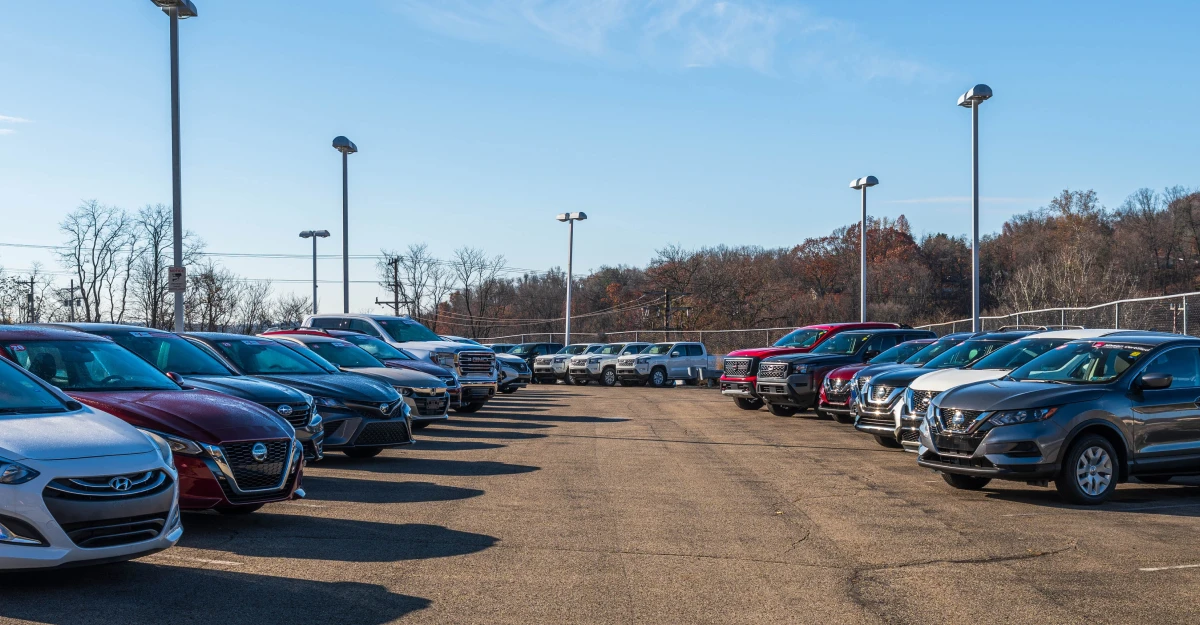
Let’s weigh the two forces using the same example. A 0.25-point rate increase on a $25,000 loan over 72 months costs about $220 more in total interest. On the other hand, a 2.3% price drop on a $30,000 vehicle represents about $690 in savings at purchase, even before counting the interest saved on that amount you do not borrow.
In other words, under current conditions, the decline in prices more than offsets the higher cost of credit for a typical buyer. This conclusion remains conditional, because it depends on the model you are considering (prices are not falling evenly across all categories), your actual rate and the negotiated price. Above all, it is a reminder of a useful principle: the total cost of a financed vehicle depends as much on the purchase price as on the interest rate.
When rates are moving, the main disadvantage is not knowing the rate you qualify for. A financing pre-approval gives you that benchmark: you know your rate, the amount you qualify for and your weekly payment before choosing a vehicle, so you shop with a set budget rather than an estimate. At Auto Durocher, applying for pre-approval takes just a few minutes and has no impact on your credit score, and we work with 18 financial institutions to compare offers based on your profile, including second- and third-chance credit.
Our Auto Durocher tip: if you plan to buy in the coming months, apply for pre-approval before the Bank of Canada’s December 9 announcement. You will know exactly what you can afford under current conditions, and if rates stay stable, you will have lost nothing. However, avoid rushing a purchase solely out of concern about rates, because a poorly chosen vehicle costs more than a quarter point of interest.
You cannot influence the Bank of Canada’s decisions, but several aspects of your financing are up to you. Here are the most effective levers:
Here is the essence of the situation at the time of writing, in November 2026:
A 25-basis-point increase changes your payment by a few dollars a month, so it deserves to be factored into your budget, without calling a well-prepared purchase plan into question. At Auto Durocher, we take the time to analyze your file, because the right financing solution depends on your budget, your credit and the vehicle you choose, and not only on the advertised rate.
To find out your rate and payment under today’s conditions, explore our financing options and apply for pre-approval online. Our team in Mirabel will then guide you, step by step, until you take delivery of your next used vehicle.